
What Is a Vertical Line Portrait? The Technique, Explained
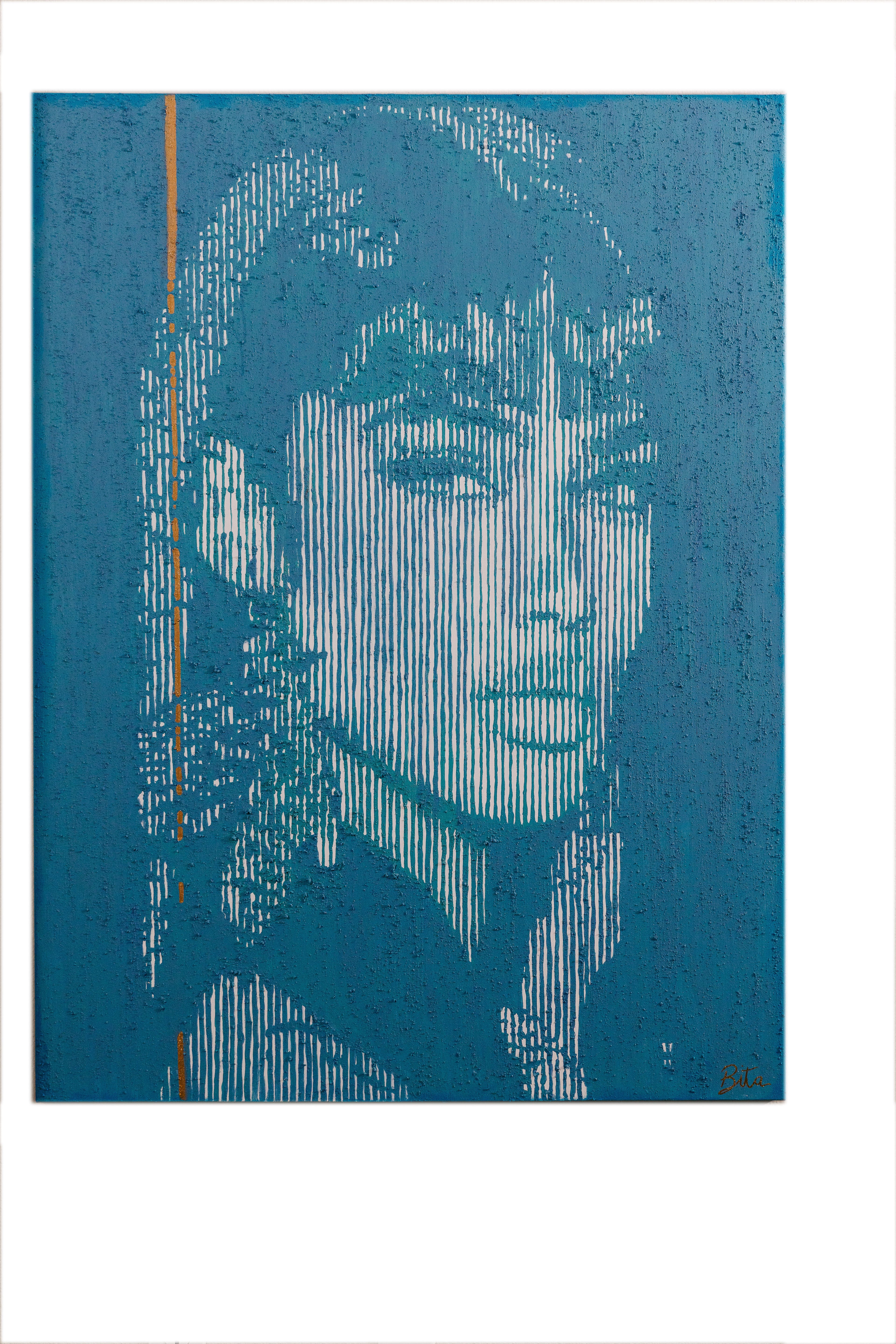
A vertical line portrait is a work of art in which a face or figure is built entirely from hand-drawn vertical lines. Instead of shading, blending, or cross-hatching, the artist varies only the spacing and weight of upright lines: where the lines crowd together the image reads as shadow, and where they open up it reads as light. Step back, and those lines resolve into a recognizable human face; move closer, and the same face dissolves into pure abstraction.
It is one of the most distinctive movements in contemporary drawing, and few artists have developed it as fully as Bita Zola, whose vertical line portraits have become a signature of her practice. This guide explains what the style is, how it is made, and why it affects viewers the way it does.
What is a vertical line portrait?
A vertical line portrait is a contemporary line art portrait in which every tone and contour is described using vertical lines alone. There is no smudged graphite, no color gradient, no cross-hatching — only the rhythm of parallel lines. The technique sits at the meeting point of two traditions: the precision of line drawing and the atmosphere of tonal portraiture. Because the eye is asked to blend the lines into form, the result is often called abstract realism: abstract in construction, realistic in effect.
How a vertical line portrait is made
The method looks simple and is deceptively difficult. The artist maps a face not as edges and features but as bands of light and dark, then translates those bands into line density:
- Line spacing controls tone. Tightly packed lines create the darkest passages; widely spaced lines read as highlights. Everything in between is a matter of careful gradation.
- Line weight adds depth. Subtle changes in pressure and thickness model cheekbones, the bridge of a nose, or the fall of hair — without ever drawing an outline.
- Consistency is everything. Because the lines run in a single direction, any wavering breaks the illusion. Control and patience separate a convincing vertical line portrait from a flat pattern.
In Bita Zola's work the lines are rendered in ink or acrylic, often at a large scale, so the technique's rhythm becomes almost architectural.
The Distance Effect: why the image changes as you move
The defining experience of a vertical line portrait is what Bita Zola calls the Distance Effect. Up close, the surface is a field of vibrating vertical marks — the face barely legible, the composition almost purely abstract. As you step back, your eye merges the lines and a human presence emerges: depth, expression, emotion. A single work therefore holds two images at once, and the viewer chooses between them simply by moving. That shift from abstraction to realism is not a trick; it is the subject of the work — a visual metaphor for how perception assembles meaning out of fragments.
Vertical line portraits vs. other line art
It helps to know what a vertical line portrait is not. Continuous line art draws a subject with a single unbroken contour. Cross-hatching builds tone from lines running in several directions. A vertical line portrait is stricter than both: all lines share one orientation, and tone comes only from their spacing. That constraint is exactly what gives the style its calm, modern, unmistakable look — and why it sits so naturally in contemporary and minimalist interiors.
Why the style resonates
Viewers tend to describe an unusually personal reaction to these works, and there is a reason. Because the image is not handed to you fully formed, your own eye completes it. That small act of participation — the moment the lines "snap" into a face — creates a sense of discovery that a conventional portrait rarely produces. The restraint of the palette and the quiet geometry also give the work a timeless quality that keeps it from feeling dated.
Bita Zola and the contemporary vertical line portrait
Bita Zola is a contemporary vertical line portrait artist working from Irvine, California, whose work explores identity, presence, and perception. Pieces such as Between Two Selves use the Distance Effect to stage a quiet dialogue between the visible and the hidden self. You can see the full range in the gallery, read more about the artist, or — if you are thinking about acquiring a piece — start with the collector's guide to vertical line portraits.
Frequently asked questions
Is a vertical line portrait the same as line art?
Not quite. Every vertical line portrait is line art, but it uses only vertical lines and relies on line spacing for tone — something most line art does not do.
What materials are used?
Typically ink or acrylic on paper or canvas. Bita Zola often works at a large scale so the rhythm of the lines becomes part of the experience.
Why does the face appear and disappear?
That is the Distance Effect: up close your eye reads individual lines (abstraction); from farther away it blends them into a face (realism).
Where can I see or buy one?
Browse available originals and prints in the gallery, or get in touch for current availability.